I. Play: Structural Points (Composition)
A. Exposition
B. The inciting incident
C. Rising and falling dramatic action
D. Crisis Climax
E. Resolution
F. Denouement
II. The Playwright (Notice the spelling: “-wright” like a wheelwright or shipwright.
The person is a playwright, and a playwright practices playwriting).
H. Tools
1. Dialogue
a. The scripted conversations of the characters.
b. Reveals character and plot.
2. Stage Directions
a. The playwright’s explanations and descriptions of what happens on stage.
b. Reveals action.
3. Structure (Narrative): Story
a. The way in which the playwright arranges the sequence of events.
b. Linear vs. Non-Linear (Star Wars and Fargo vs. Memento and Pulp Fiction)
I. Process
1. Internal
a. The collection, research, and thought process stage.
b. Think of a sponge soaking up everything around it.
c. Germination of idea
i. Rough story line
ii. Decide on message
iii. Creates characters
iv. Envision stage moments
v. Decides on style of dialogue
vi. Brainstorms structure
d. Research
2. Crafting or writing
a. Ways to begin:
i. Character
ii. Plot
iii. Improvisation with actors
3. Development
a. The text is now in a 2nd draft by this point.
b. Staged Readings (Allows the playwright to see audience reaction in an informal environment).
c. First productions
i. The playwright typically works closely with the director.
ii. Re-writes during rehearsal
III. Production and Show
1. A company selects a playwright’s script.
2. The producer negotiates the performance rights for the play through the playwright or his agent.
3. The theatre company pays the royalty fees.
a. Based on:
i. Playwright’s name
ii. Whether the play is a one act, full length, or a musical.
iii. Professional and Amateur Rights
iv. Physical size of the theatre
v. Ticket prices
http://script.vtheatre.net/5 -- writing
 Backwards and Forwards: A Technical Manual for Reading Plays by David Ball; Southern Illinois University Press, 1983 : - Part One: Shape
- 1: What Happens That Makes Something Else Happen?
- 2: And What Happens Next?
- 3: But Do It Backwards
- 4: Stasis and Intrusion
- 5: Obstacle, Conflict
- 6: Ignorance is Bliss (or: the Very Cause of Everyone's Lunacy About Hamlet)
- 7: Things Theatrical
- Part Two: Methods
- 8: Exposition
- 9: Forwards: Hungry for Next
- 10: Missing Persons (character)
- 11: Image
- 15: Families
- 16: Generalities: Mood, Atmosphere
- 17: The Unique Factor
- 18: Changing Eras
- 19: Climax
- 20: Beginnings/Endings
- 21: Rereading
- 22: What Next?
Backwards and Forwards: A Technical Manual for Reading Plays by David Ball; Southern Illinois University Press, 1983 : - Part One: Shape
- 1: What Happens That Makes Something Else Happen?
- 2: And What Happens Next?
- 3: But Do It Backwards
- 4: Stasis and Intrusion
- 5: Obstacle, Conflict
- 6: Ignorance is Bliss (or: the Very Cause of Everyone's Lunacy About Hamlet)
- 7: Things Theatrical
- Part Two: Methods
- 8: Exposition
- 9: Forwards: Hungry for Next
- 10: Missing Persons (character)
- 11: Image
- 15: Families
- 16: Generalities: Mood, Atmosphere
- 17: The Unique Factor
- 18: Changing Eras
- 19: Climax
- 20: Beginnings/Endings
- 21: Rereading
- 22: What Next?
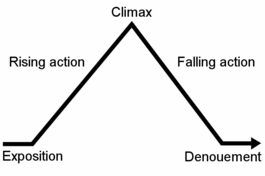
 * How the three of the structure categories interdependent?
