... captions.
NEW:
|
biomech & biomx
... captions.
NEW:
|
|
“The actor must train his material [the body] so that he is capable of executing instantaneously those tasks which are dictated externally.” V.E. Meyerhold, 1922
Pix and banners will take you to Biomechanics directory!
Also, some bio info on Meyerhold
|


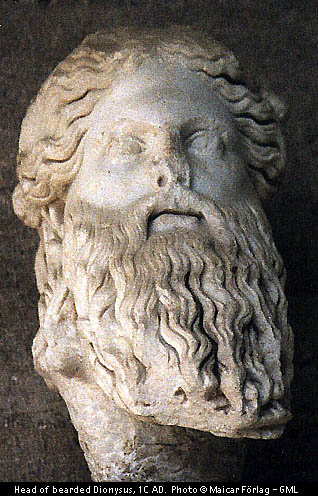
1 - 2- 3 [pages] Two new guides -- Apollo and Dionysos (on the right). Do you know why?"He believed that reality should be created in the mind of the spectator rather than on stage, and based his work on Pavlov's Theory Association."[3]
[ this page is from the future: acting II (intermediate) class ] 
It's theory or simply practicality, but I use BM for comedy. Physical action, big choices -- and the effect.
comedy & comical Use 12th Night, start with the monologue. Use 12night pages in SHOWS directory. I recommend Malvolio's monologue (letter).
Biomechanics (BM) - antirealistic system of dramatic production developed in the Soviet Union in the early 1920s by the avant-garde director Vsevolod Meyerhold. Meyerhold drew on the traditions of the commedia dell'arte and kabuki and on the writings of Edward Gordon Craig for his system, in which the actor's own personality was eliminated and he was entirely subordinated to the director's will. Coached as gymnasts and acrobats and emphasizing pantomime rather than words, the actors threw themselves about in puppetlike attitudes at the director's discretion. For these productions the stage was exposed to the back wall and was then furnished with harshly lit, bare sets consisting of scaffoldings, ladders, and ramps that the actors used. Biomechanics had lost its appeal by the late 1920s, though Meyerhold's emphasis on external action did become an element in Soviet actor-training techniques. [ Britannica ]

Use monologues and scenes from "The Importance of Being Earnest" (SHOWS directory).
PS
BM is for THR221 Acting; here is only the introduction. To show the artrenative to Method Acting techniques, stressing physical acting.Visualization requires expressing all the attributes of the character: age, social background, specific traits.
Do you know how to use the center of gravity principle for age characterization? Where is the center of gravity in child's body? In the old person?
The Walks: characterization is a must.
Homework
Scenes for class from Mikado(Nanki-Poo embraces Yum-Yum. Enter Ko-Ko. Nanki-Poo releases Yum-Yum.)
KO. Go on--don't mind me.
NANK. I'm afraid we're distressing you.
KO. Never mind, I must get used to it. Only please do it by degrees. Begin by putting your arm round her waist. (Nanki-Poo does so.) There; let me get used to that first.
YUM. Oh, wouldn't you like to retire? It must pain you to see us so affectionate together!
KO. No, I must learn to bear it! Now oblige me by allowing her head to rest on your shoulder.
NANK. Like that? (He does so. Ko-Ko much affected.)
KO. I am much obliged to you. Now--kiss her! (He does so. Ko-Ko writhes with anguish.) Thank you--it's simple torture!
YUM. Come, come, bear up. After all, it's only for a month.
KO. No. It's no use deluding oneself with false hopes.
NANK. and YUM. What do you mean?
KO. (to Yum-Yum). My child--my poor child! (Aside.) How shall I break it to her? (Aloud.) My little bride that was to have been?
YUM. (delighted). Was to have been?
KO. Yes, you never can be mine!
NANK. and YUM. (simultaneously, in ecstacy): What!/I'm so glad!
KO. I've just ascertained that, by the Mikado's law, when a married man is beheaded his wife is buried alive.
NANK. and YUM. Buried alive!
KO. Buried alive. It's a most unpleasant death.
NANK. But whom did you get that from?
KO. Oh, from Pooh-Bah. He's my Solicitor.
YUM. But he may be mistaken!
KO. So I thought; so I consulted the Attorney General, the Lord Chief Justice, the Master of the Rolls, the Judge Ordinary, and the Lord Chancellor. They're all of the same opinion. Never knew such unanimity on a point of law in my life!
NANK. But stop a bit! This law has never been put in force.
KO. Not yet. You see, flirting is the only crime punishable with decapitation, and married men never flirt.
NANK. Of course, they don't. I quite forgot that! Well, I suppose I may take it that my dream of happiness is at an end!
YUM. Darling--I don't want to appear selfish, and I love you with all my heart--I don't suppose I shall ever love anybody else half as much--but when I agreed to marry you--my own--I had no idea--pet--that I should have to be buried alive in a month!
NANK. Nor I! It's the very first I've heard of it!
YUM. It--it makes a difference, doesn't it?
NANK. It does make a difference, of course.
YUM. You see--burial alive--it's such a stuffy death!
NANK. I call it a beast of a death.
YUM. You see my difficulty, don't you?
NANK. Yes, and I see my own. If I insist on your carrying out your promise, I doom you to a hideous death; if I release you, you marry Ko-Ko at once![from ACT II]
NB
Read the whole play in order to understand the scene.
Next : biomechnics.vtheatre.net


Readers Profile (10.10.04)
I am
film major 6 (16%)
theatre major 1 (2%)
in high school 9 (25%)
middle school 0 (0%)
teach film 1 (2%)
teach theatre 4 (11%)
professional actor 4 (11%)
filmmaker 2 (5%)
director 4 (11%)
writer 5 (13%)
[ 36 Total -- Please, vote! ] Biomechanics and "camera acting" in film directing *
ET: I understand BM better, because it's mechanical...

Presentationalism vs. Representationalism
· Drama is a mix of both. The former would be all performance with no hint of a fictional life, while the latter would lack any spectacle or interest.
· Presentationalism: Frank acknowledgement of stage and audience. Actors may speak to us and stage may be bare, so audience must engage their imagination to create a virtual existence for the characters.
· Representationalism: emphasizes life through illusion (realism and naturalism). Shows people living their life, oblivious to being watched. A play can never avoid escape presentation, though (fights must be staged, for example).