"Do not wait for the emotional state to "come". It'll come never. You must be prepared for it to come and be open to it. You must be ready to be stimulated by a sound, a movement, or a silence. Don't be afraid of the pauses. Pause creates poetry and magic… A major actor is the one that listens right, not the one that talks. If you listen right you'll answer convincingly." -- Koun
Stage Directions Guide to Directing (Stage Directions Guides)
We will combined classes with the Intermediate Acting (focus on Biomechanics)
Each of us has his own methods, systems, tricks -- as you notice, I begin my pre-production period way ahead. In SHOWS directory I have an individual page for every main character; I print them out and take with me to the auditions. The list, resumes and audition forms I leave to my stage manager and make all notes on the character pages. It help me to stay focus on what I need for the role.
Questions
«In the creative process there is the father, the author of the play; the mother, the actor pregnant with the part; and the child, the role to be born». Stanislavsky
Anton Chekhov
From "Cameron & Gillespie": Actor-Director relationship can be seen in a number of ways:
The director as parent --authoritarian
Guru --visionary
Therapist ---"trust me"
Seducer --emotional attachment
Victim --cajoler
Playground Director --fun and creative
Green Thumb --let’s grow—little planning
Lump --vague
Amalgam of above is probably best
Preparation and adaptability necessary
Less actor coaching as performance approaches
Commedia Dell'arte: An Actor's Handbook by John Rudlin; Routledge, 1994 - Introduction
- Part I: The Commedia Dell’Arte
- Origins
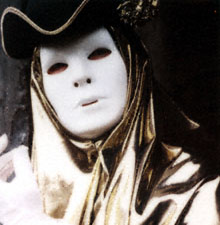
- The Mask
- Playing Commedia
- Part II: The Stock Characters
- The Zanni
- The Old Men
- The Lovers
- Il Capitano
- Colombina
- Other Masks
- Minor Masks
- Part III: The Twentieth Century
- Craig at the Arena Goldoni
- Meyerhold Dappertutto
- Copeau’s New Improvised Comedy
- Charles Dullin: Letters from the Front
- The Servant of Two Masters
- The Lecoq School
- Le ThéâTre Du Soleil
- The San Francisco Mime Troupe
- Tnt (The New Theatre)
- Dario Fo
- Carlo Boso and Antonio Fava
- Restoration or Renovation?
- Appendix: Making a Leather Mask
- Notes
- A Selection of Works on Commedia Dell’Arte in English
"Second mariage" -- match between the play and your concept.
Selection criteria:
Type
Talent
Training
Personality
"Chemistry" with partners
Monologues + Improv and cold Readings
Callbacks
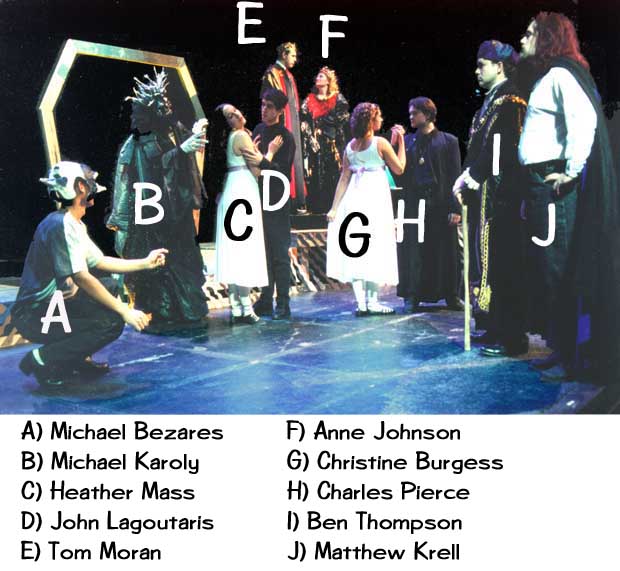
Ensemble Concept (Rehearsals)
Wating for Godot
NEW:
...
Cast
ENSEMBLE - An acting group. Normally used to describe a group of actors who work well together, with no-one outshining the others.
Yes, director makes the call, but at the end the fate of the show depends on actors... sometimes even a single actor. In the movie industry this fact is obvious. Casting mistake can cost you a show, my friend.
Listen to me, go back to the play you are to direct -- read again, think again... this is the only way to help yourself in casting. And call your actors back. Help them to help you; get them closer to the text...
And watch the chemistry. They have to be together at the end of your journey.
"It is very hard to cast a number of plays adequately from the same company of actors without several parts being miscast." John Gielgud *
Film Acting
There are "cast" pages in acting directories (BioMethod, Biomechanics, Method) with the "amplua" breakdown, typecasting and etc. Since casting = job, this is a big deal for actors. Most of them do not understand how directors do it. Many directors do not understand how they do it. "Casting Directors"? I never heard of them before I came to the States!
Casting is the "matchmaking"! I have to match the part with the actor, according to vision! How? Oh, the mystery of finding your soul mate!
I noticed that after auditions I do not want to think about casting... I want my instincts to do the preliminary work. I don't want to go with what is "right" -- I have to take my chances. The choice of an actor is no less important than your choice of a script. Do I see a face, when I think about the show before auditions? Sort of. More a feel. You have to stay open. Auditions re-write the script.
In the past (and Europe) playwrights wrote for actors (movie industry). Were Chekhov and Stanislavsky lucky? I don't know; both are dead. My reality is different...
During the "table period" (right after the casting) I ask every actor to find in the play his or her key scenes and monologues (I have my own preferences) -- and we start individual rehearsal with the analysis of those key monologues (see mono pages in Acting, Method and Biomechanicas).
Casting is instrumental in helping you understand the play. If you cast it right, as soon as the actor steps on the stage, you get certain impressions that help you understand what the play is about. Howard Kissel
@2001-2004 film-north *
TYPECAST - An actor who is regularly cast in the same kind of roles is said to be TYPECAST. If an actor has played similar roles for a while (e.g. muscle-bound baddie) and is cast in a completely different role (e.g. a nanny) he's said to have been cast AGAINST TYPE.
Types
[ image : type ]
[ image : description ]
[ image : concept ]
[ image : style ]
Directing for the Stage (Stagecraft)
In Directing for the Stage, 12 top international directors reveal their approach, their inspirations, and what they believe the future holds for live theatre. The book brings together the diverse processes and methods of its contributors using their own words. Each has contributed unique visual material- sketches, notes, images from the rehearsal process, drawings of the set in progress, and images from the final productions.
"We're tightrope walkers. When you walk the wire in a movie, the wire is painted on the floor, but when you walk it on the stage, it's a hundred feet high without a net.... You've got to do it, because you're on the wire and there's no going back again like you can in the movies. That does a whole different thing to you psychologically. It's with you all the time--you know you've gotta walk that wire." Al Pacino, actor
 Anton Chekhov